
Primary duty
Last-trip rescueDesigned to help complete the last trip and bring passengers to a safe floor during power failure.Lift backup / Elevator continuity
Lift Inverter for Elevator Power Backup
Purpose-engineered inverter backup for lift motors, controllers and safety circuits where starting demand and rescue behaviour matter.
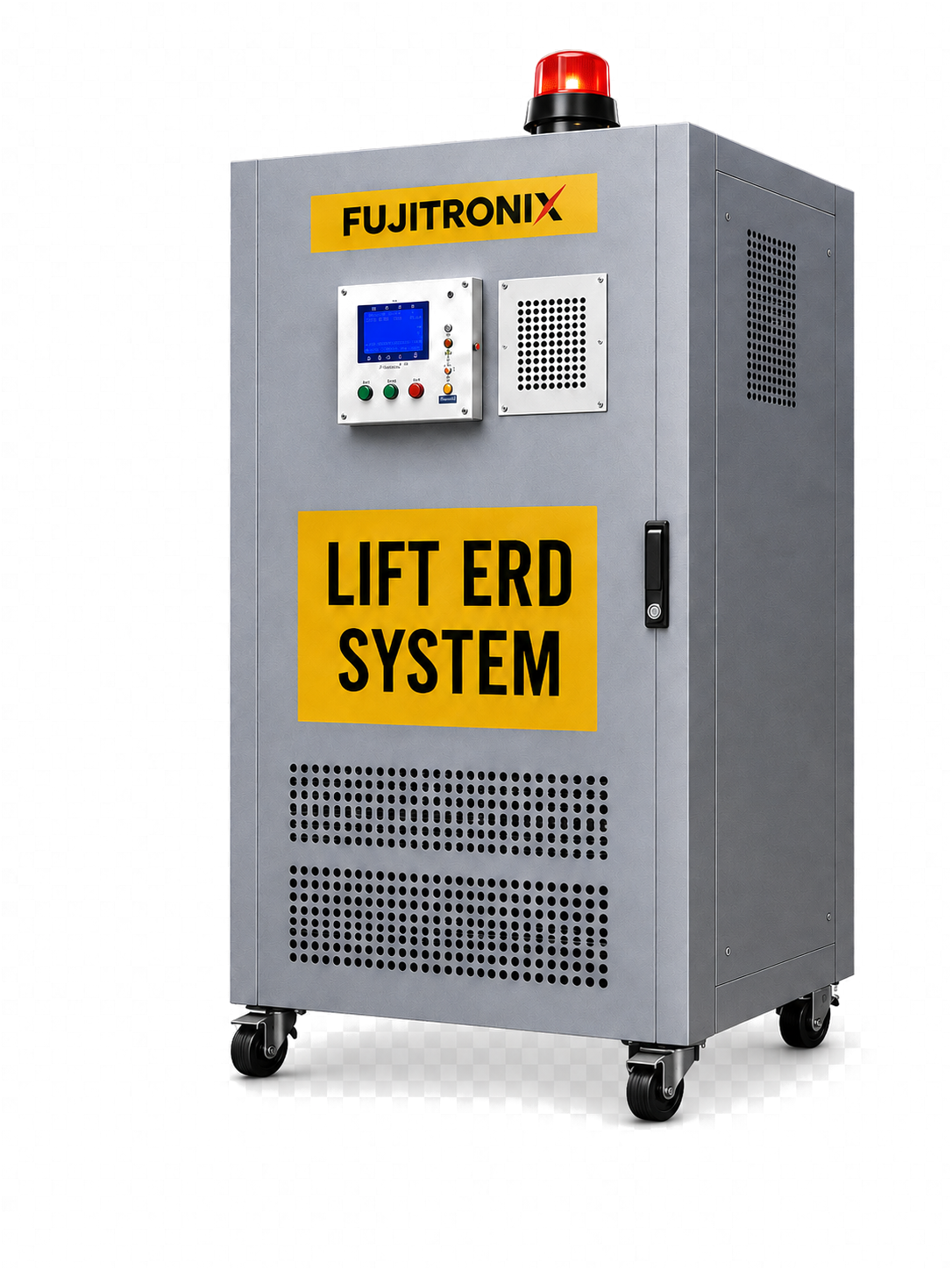
01Motor-load engineering
02Pure sine-wave output
03Fast changeover
04Battery-backed rescue / backup
Engineering answer
Select from the load backward.
Confirm the real connected load, phase, starting or inrush behaviour, power-quality requirement, target runtime where relevant, site conditions and future headroom before locking capacity or configuration.
Request technical sizingLift ERD & elevator power backup
Fujitronix Lift ERD · Product photographPublished product-family facts
What Fujitronix states—and what still needs confirmation.
Load type
Lift motor + controlsSizing must include motor starting demand, controller behaviour and safety circuits.Battery options
SMF / VRLA / lithiumThe final battery bank depends on required trips, current demand and installation conditions.Service statement
24-hour addressal*Company material states complaints are addressed within 24 hours; resolution time depends on site and fault.Start with the requirement
A lift inverter must be selected as a motor-power system.
Purpose-engineered inverter backup for lift motors, controllers and safety circuits where starting demand and rescue behaviour matter.
How to select
Choose the right system before you choose the rating.
A lift is a high-inrush motor load tied to a controller and safety sequence. Backup selection therefore starts with motor rating, controller compatibility, phase, starting demand and the required behaviour during mains failure—not the building floor count alone.
- Lift motor rating and type
- Controller / VVVF details
- Incoming phase and voltage
- Rescue-only vs continued operation
- Required trips or backup duration
- Battery location and installation constraints
Commercial selection
What changes the final configuration and quote?
Capacity depends on motor kW/HP, VVVF/controller characteristics, input phase, acceleration/current demand, rescue or continued-operation objective, battery voltage and required trips or minutes of backup.
System operation
Define the exact lift behaviour after mains failure.
A rescue-only requirement is different from running the lift for repeated trips. The sequence may include detecting mains failure, safely transferring the load, moving the car to a permitted floor, opening the doors and returning the system to normal when mains returns. The lift vendor, controller supplier and backup-system team should agree this sequence before final sizing and commissioning.
Lifecycle planning
A lift backup system needs periodic rescue testing—not only a healthy display.
Battery voltage alone does not prove that the system can start the motor and complete the required movement. Planned checks should cover the battery bank, charger, changeover, controller interface, alarms, ventilation, cable terminations and an actual supervised rescue cycle. Test frequency and method should follow the lift OEM, site safety plan and selected Fujitronix model documentation.
Site planning
Installation planning for lift inverter.
Lift backup must be coordinated with the elevator controller and building electrical system. The machine-room or controller location, cable route, earthing, battery placement, rescue logic and changeover behaviour should be agreed with the lift / MEP team before commissioning.
- Motor and controller compatibility
- Rescue / continued-operation sequence
- Battery placement and cable route
- Changeover behaviour
- Safety-circuit coordination
- Functional rescue test
RFQ checklist
What to send before requesting a lift inverter proposal.
Share the lift make, controller/VVVF details, motor kW or HP, supply phase, number of lifts, required rescue behaviour, expected trips or runtime, battery preference and machine-room / installation constraints.
Fujitronix approach
A useful proposal should answer more than capacity.
Fujitronix combines requirement review, product selection, manufacturing and lifecycle service. For a useful proposal, share the load schedule, phase, backup objective, site conditions and any monitoring, bypass, battery or integration requirement. The quotation should clearly state the recommended system and what is included.
Buyer & engineering checklist
Four decisions that shape the lift inverter proposal.
Clear answers at the enquiry stage reduce incorrect sizing, missing accessories and price comparisons between unlike systems.
Rescue only or continued operation?
An ARD/ERD rescue duty and a longer-duration lift UPS duty are different requirements. Define the expected behaviour first.
What lift data is essential?
Lift make, motor kW/HP, controller or VVVF details, phase, number of lifts and the rescue sequence.
How is battery size decided?
From the required trips or minutes, motor demand, DC voltage, battery chemistry, ageing allowance and recharge window.
Can it work with any lift?
Fujitronix states compatibility with major lift brands, but controller and site compatibility must be checked before supply.
Avoid weak specifications
Common mistakes that lead to the wrong quotation.
- 01Selecting from building floor count alone
- 02Treating ARD, ERD and full lift UPS as the same duty
- 03Ignoring motor starting current and controller data
- 04Quoting batteries without a trip/runtime basis
Product + manufacturing evidence
A closer look at the system and the people who build it.
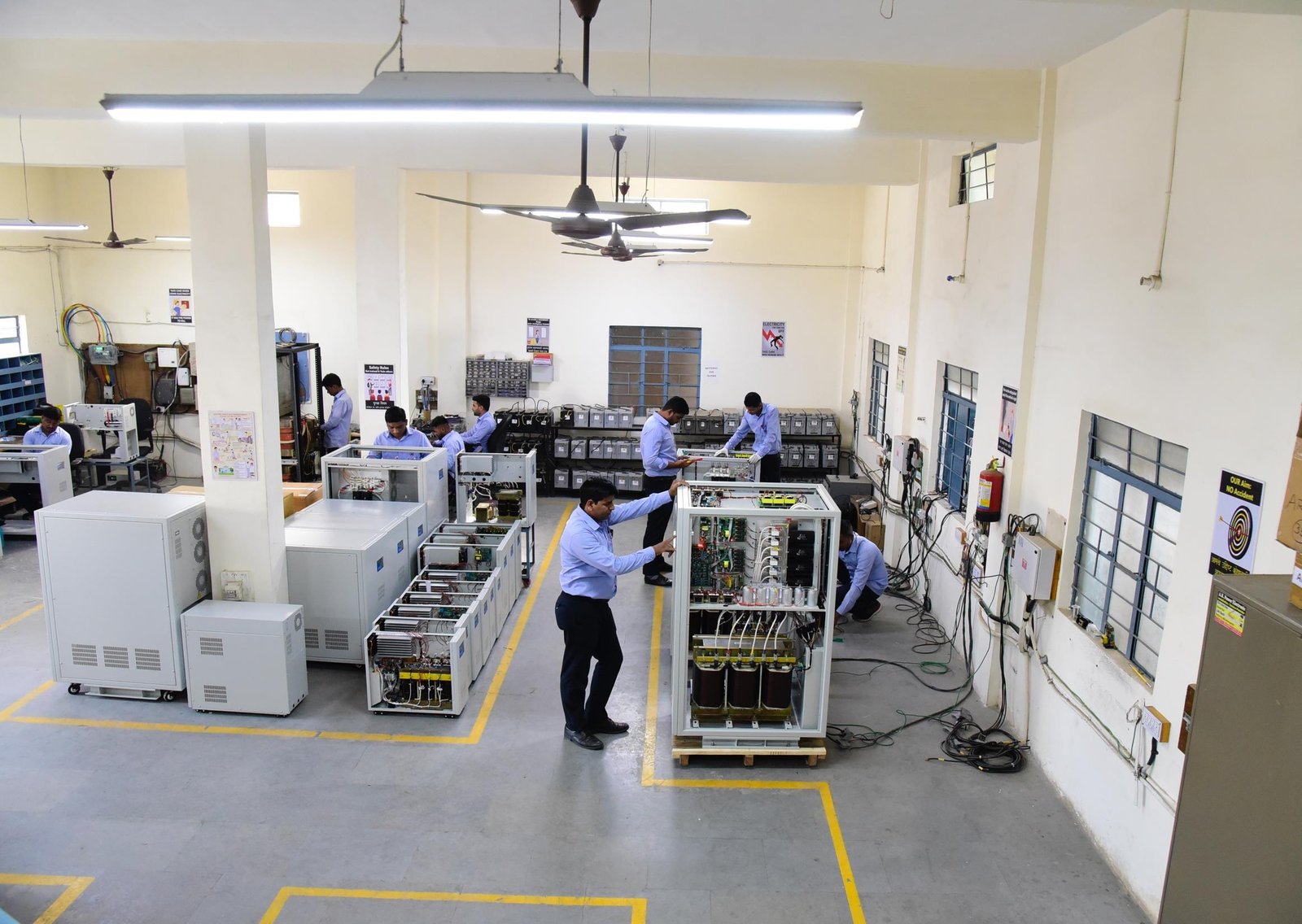
The product cutout comes from Fujitronix's supplied company material. The second image shows the Pune manufacturing or power-electronics environment behind the product range.
Application areas
Where this architecture fits.
Final selection depends on site electrical conditions and the connected load.
01Residential elevators
02Commercial buildings
03Hospitals & clinics
04Hotels & hospitality
05Villas & bungalows
06Goods and service lifts
Application + product images
See where the requirement appears in the real world.
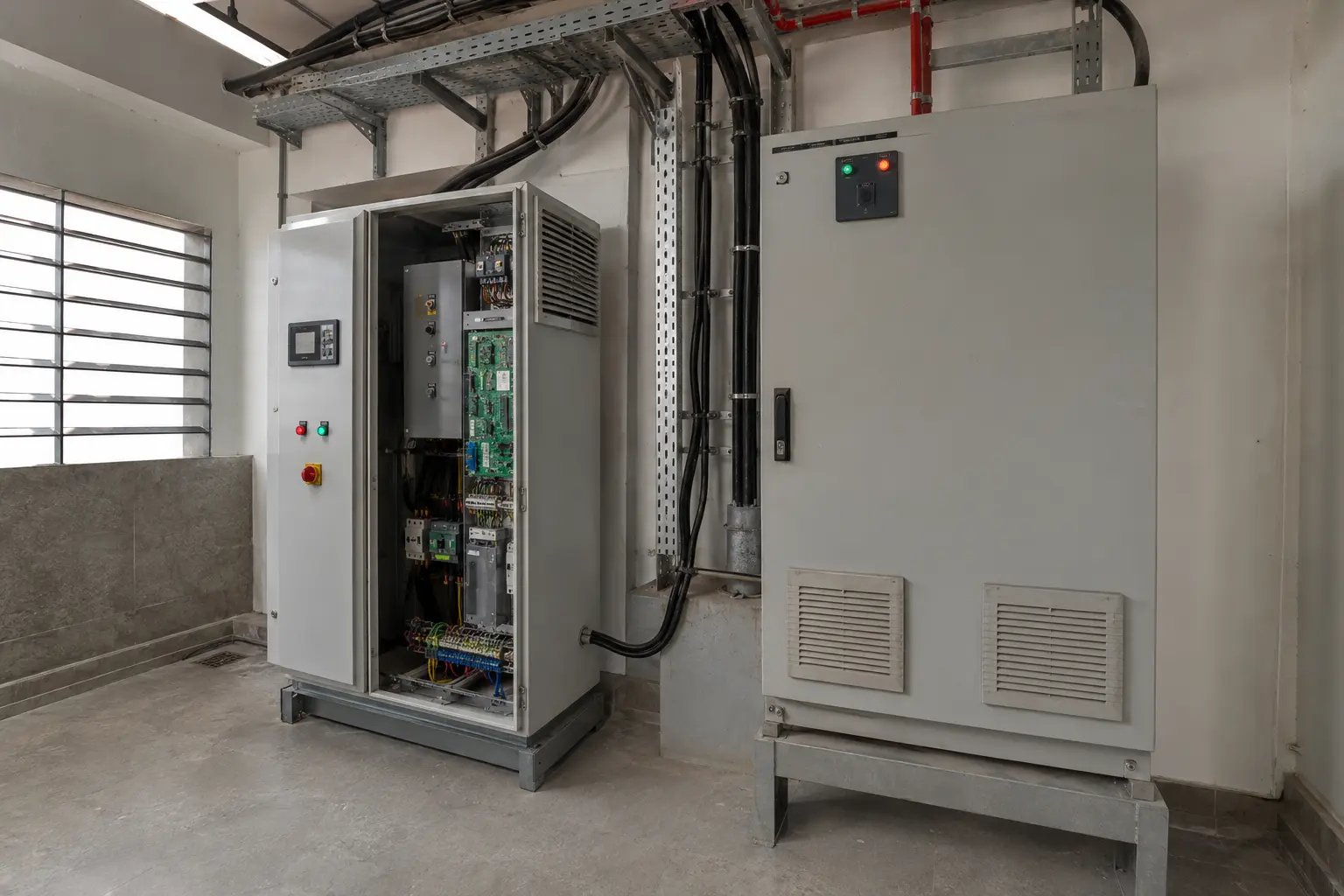
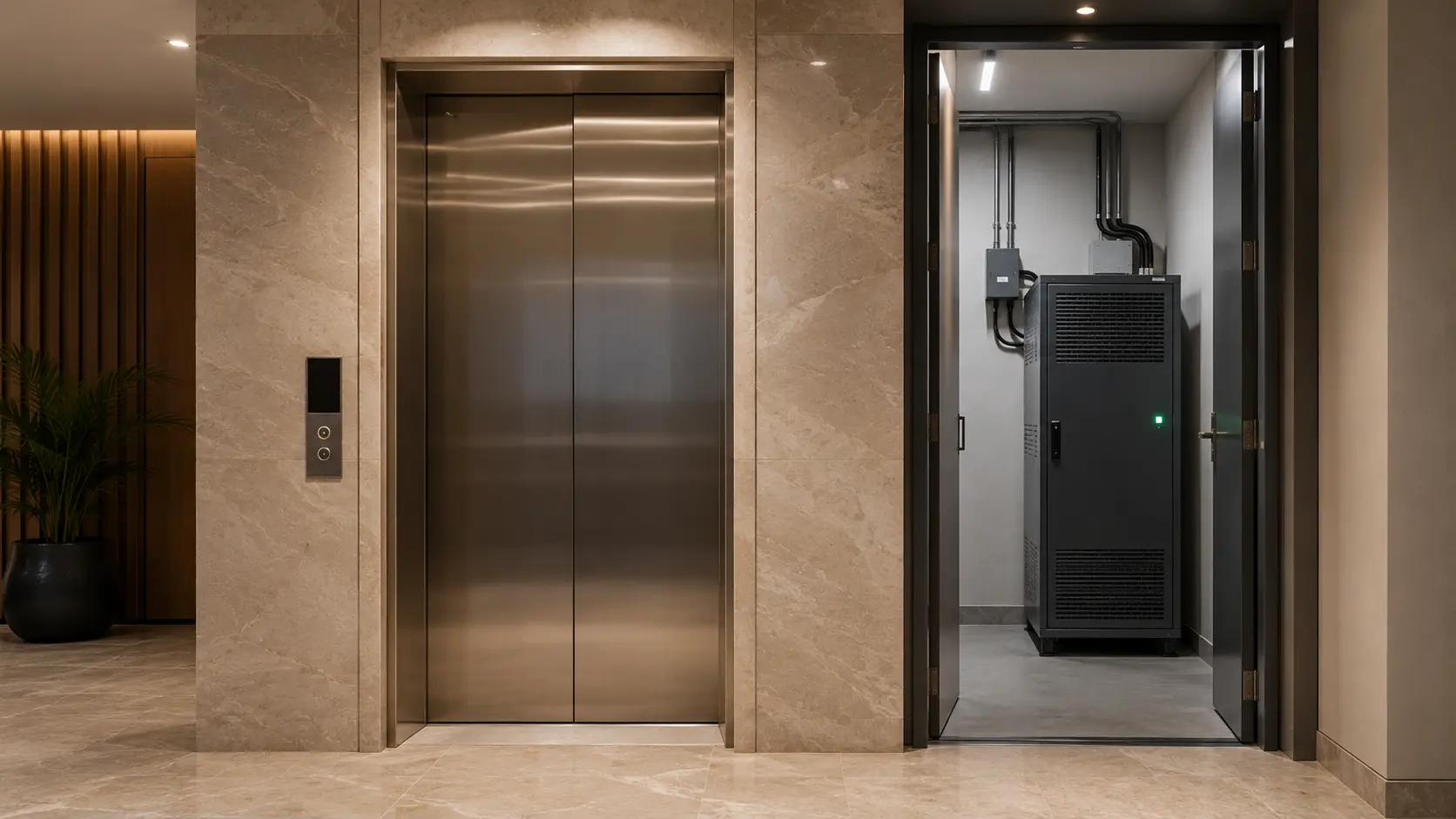
Application visuals explain the electrical environment. Fujitronix product and factory material is identified separately so buyers can easily see what comes directly from the company.
Frequently asked questions
Clear answers before you shortlist a system.
Practical answers for purchase teams, consultants, facility managers and business owners planning a serious enquiry.
01What should I check before buying lift inverter?+
Capacity depends on motor kW/HP, VVVF/controller characteristics, input phase, acceleration/current demand, rescue or continued-operation objective, battery voltage and required trips or minutes of backup.
02What information is needed to size lift backup?+
Provide the lift motor rating, controller details, supply phase, required rescue or operating behaviour, expected runtime or trips, and installation conditions.
03Can lithium batteries be used for lift backup?+
Fujitronix's published lift backup information references SMF / VRLA and lithium battery compatibility. The battery architecture must still be sized for motor surge and required runtime.
04Is lift UPS the same as an ARD?+
Not necessarily. An ARD is typically focused on completing a rescue movement after mains failure, while a lift UPS or inverter can be engineered for a broader backup duty. The required rescue sequence and lift-controller compatibility should be confirmed first.
05What should I send Fujitronix for a faster lift inverter recommendation?+
Share the lift make, controller/VVVF details, motor kW or HP, supply phase, number of lifts, required rescue behaviour, expected trips or runtime, battery preference and machine-room / installation constraints.
06Can lift inverter be selected only from price or nominal rating?+
Not reliably. Capacity depends on motor kW/HP, VVVF/controller characteristics, input phase, acceleration/current demand, rescue or continued-operation objective, battery voltage and required trips or minutes of backup. A comparable proposal should state the assumed load, topology, included battery or accessories, installation scope and the conditions used for sizing.
07What should be verified during installation or commissioning of lift inverter?+
Lift backup must be coordinated with the elevator controller and building electrical system. The machine-room or controller location, cable route, earthing, battery placement, rescue logic and changeover behaviour should be agreed with the lift / MEP team before commissioning. The exact commissioning checklist should follow the selected product documentation and project scope.
08Does Fujitronix support installation and after-sales service for lift inverter?+
Yes. Fujitronix's supplied company profile lists consultation, installation, operator training, maintenance, battery replacement, upgrades, emergency support, and comprehensive or non-comprehensive AMC options. Final coverage, response and inclusions depend on the product, site and agreed commercial scope.
Need help choosing?