
Technology
True onlineDouble-conversion operation provides conditioned power with zero transfer time for supported critical loads.Online UPS / Critical power
UPS for Hospital, Medical Equipment & Laboratory Loads
UPS and backup architecture for clinical environments where imaging, labs, IT, emergency systems and lifts have different electrical and continuity requirements.
01True online double conversion
02DSP-based control
03IGBT switching
04Pure sine-wave output
Engineering answer
Select from the load backward.
Confirm the real connected load, phase, starting or inrush behaviour, power-quality requirement, target runtime where relevant, site conditions and future headroom before locking capacity or configuration.
Request technical sizingOnline UPS system
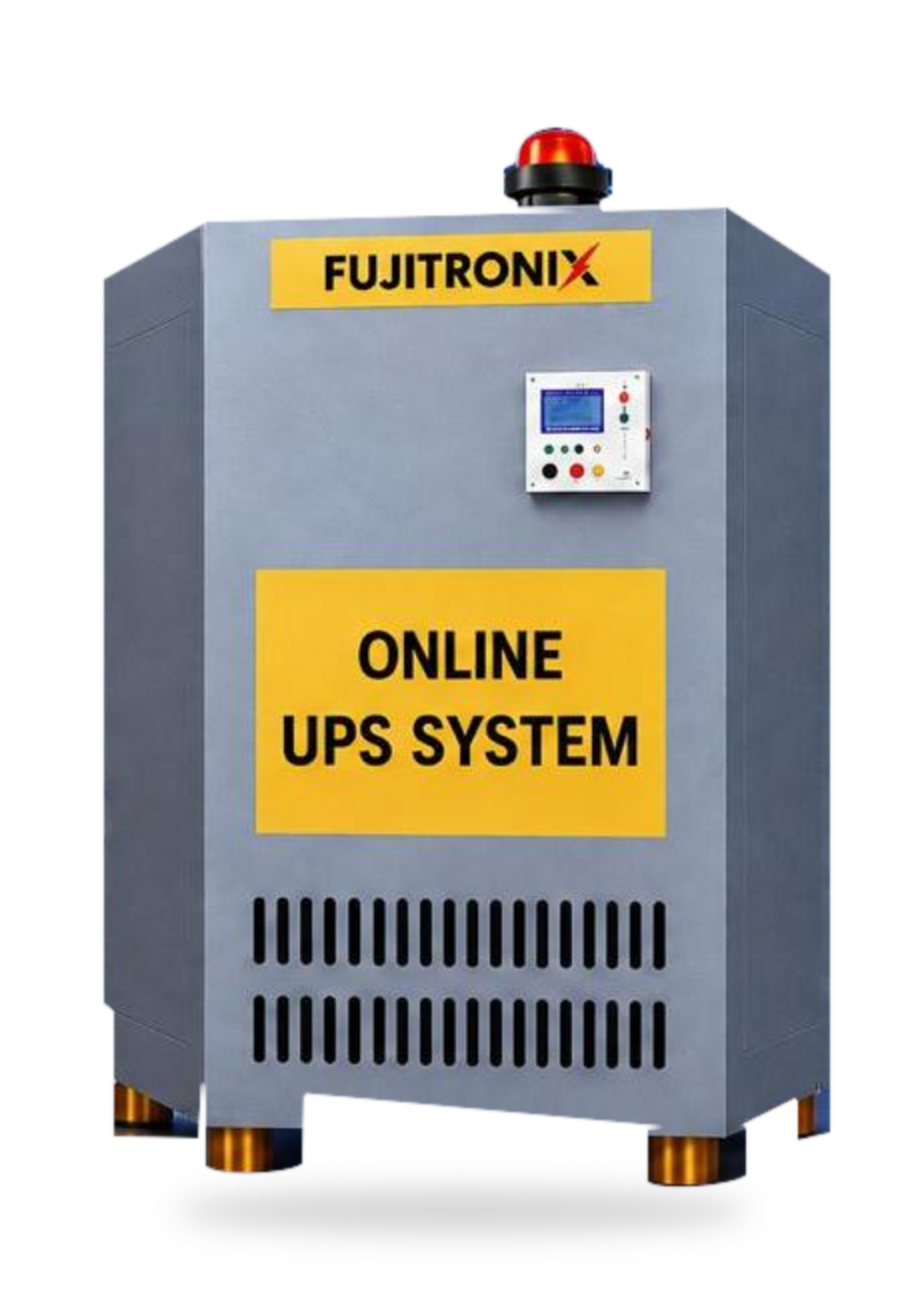
Fujitronix Online UPS · Product photographPublished product-family facts
What Fujitronix states—and what still needs confirmation.
Portfolio communication
10–350 kVALatest company material states a 3-phase input / 3-phase output portfolio range; model ranges vary.Power quality
Pure sine wavePublished information describes DSP control, IGBT switching and a clean regulated output.Protection
Multi-layerShort-circuit, overload, overheat, surge and battery protection are stated; confirm by model.Start with the requirement
Segment healthcare loads before you size the UPS.
UPS and backup architecture for clinical environments where imaging, laboratories, clinical IT, operation-theatre support systems and lifts have different electrical and continuity requirements. Equipment such as MRI/CT systems must be validated against manufacturer electrical requirements rather than assumed compatible from kVA alone.
How to select
Choose the right system before you choose the rating.
A true online double-conversion UPS keeps the load on a conditioned inverter path, so the selection is fundamentally about power quality as well as backup time. Fujitronix publishes DSP control, IGBT switching, PWM sine-wave output, protection logic and optional communications on its ERD-FTX platform.
- Connected load and power factor
- Single- or three-phase input/output
- Required battery runtime
- Load inrush and future headroom
- Bypass / isolation requirements
- Monitoring such as RS232 or SNMP
Commercial selection
What changes the final configuration and quote?
Identify each protected load, manufacturer electrical requirements, allowable interruption, phase, power quality sensitivity, runtime and clinical consequence. MRI/CT and other equipment require equipment-specific validation rather than generic compatibility claims.
System operation
Segment the load before deciding UPS capacity or redundancy.
Put servers, network, medical, controls and other essential equipment in a clear critical-load schedule. Record measured load where possible, identify equipment with high starting demand and decide what can safely remain outside the UPS. For high-availability sites, also define whether N+1 redundancy, parallel operation, maintenance bypass or remote monitoring is required. This prevents a large but poorly planned UPS from becoming a single point of failure.
Lifecycle planning
Battery condition, cooling and bypass planning decide long-term readiness.
UPS batteries age faster in heat and under repeated deep discharge. A practical maintenance plan records alarm history, battery/string readings, charger condition, fans, capacitors, filters, connections, bypass status and load level. Runtime should be rechecked against the present load because business equipment often changes after the UPS is installed.
Site planning
Installation planning for ups for hospital.
UPS performance depends on the electrical environment around the cabinet as much as the cabinet itself. Input protection, cable sizing, earthing, ventilation, battery location, bypass strategy and service clearance should be reviewed before installation so the commissioned system matches the design intent.
- Input and output distribution
- Earthing and protection coordination
- Battery bank location and ventilation
- Maintenance / static bypass plan
- Cooling and service clearances
- Load test and alarm verification
RFQ checklist
What to send before requesting a ups for hospital proposal.
Share a load schedule, present and future kW/kVA, phase, target autonomy, battery preference, bypass requirement, monitoring requirement and site city. If the load includes motors, medical devices or process equipment, include the equipment electrical data as well.
Fujitronix approach
A useful proposal should answer more than capacity.
Fujitronix combines requirement review, product selection, manufacturing and lifecycle service. For a useful proposal, share the load schedule, phase, backup objective, site conditions and any monitoring, bypass, battery or integration requirement. The quotation should clearly state the recommended system and what is included.
Buyer & engineering checklist
Four decisions that shape the ups for hospital proposal.
Clear answers at the enquiry stage reduce incorrect sizing, missing accessories and price comparisons between unlike systems.
What load is actually critical?
Separate essential equipment from loads that can shut down; then record real kW/kVA and power factor.
Which phase configuration is needed?
Confirm incoming supply and protected load: 1PH–1PH, 3PH–1PH or 3PH–3PH where available.
How much runtime is needed?
Battery sizing depends on protected load, target minutes or hours, DC voltage, chemistry and ageing margin.
Is bypass or monitoring required?
Critical sites may need maintenance bypass, isolation, RS232/SNMP monitoring and redundancy planning.
Avoid weak specifications
Common mistakes that lead to the wrong quotation.
- 01Sizing only from nominal kVA
- 02Adding battery time without checking real load
- 03Ignoring bypass and maintenance access
- 04Assuming one UPS series covers every phase and capacity
Product + manufacturing evidence
A closer look at the system and the people who build it.
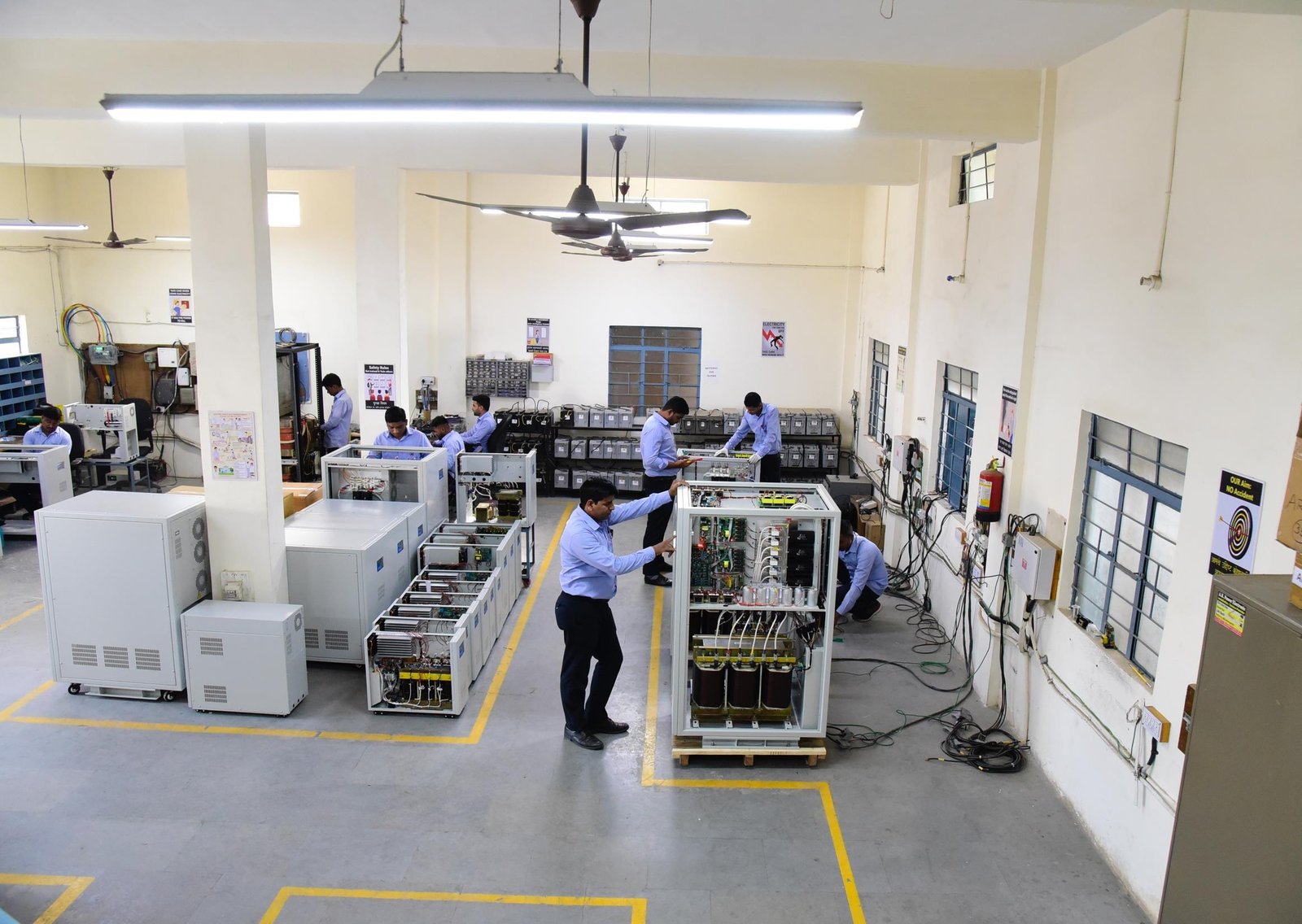
The product cutout comes from Fujitronix's supplied company material. The second image shows the Pune manufacturing or power-electronics environment behind the product range.
Application areas
Where this architecture fits.
Final selection depends on site electrical conditions and the connected load.
01Hospitals
02Clinics
03Diagnostic centres
04Medical laboratories
05Clinical IT
06Approved medical equipment applications
Application + product images
See where the requirement appears in the real world.
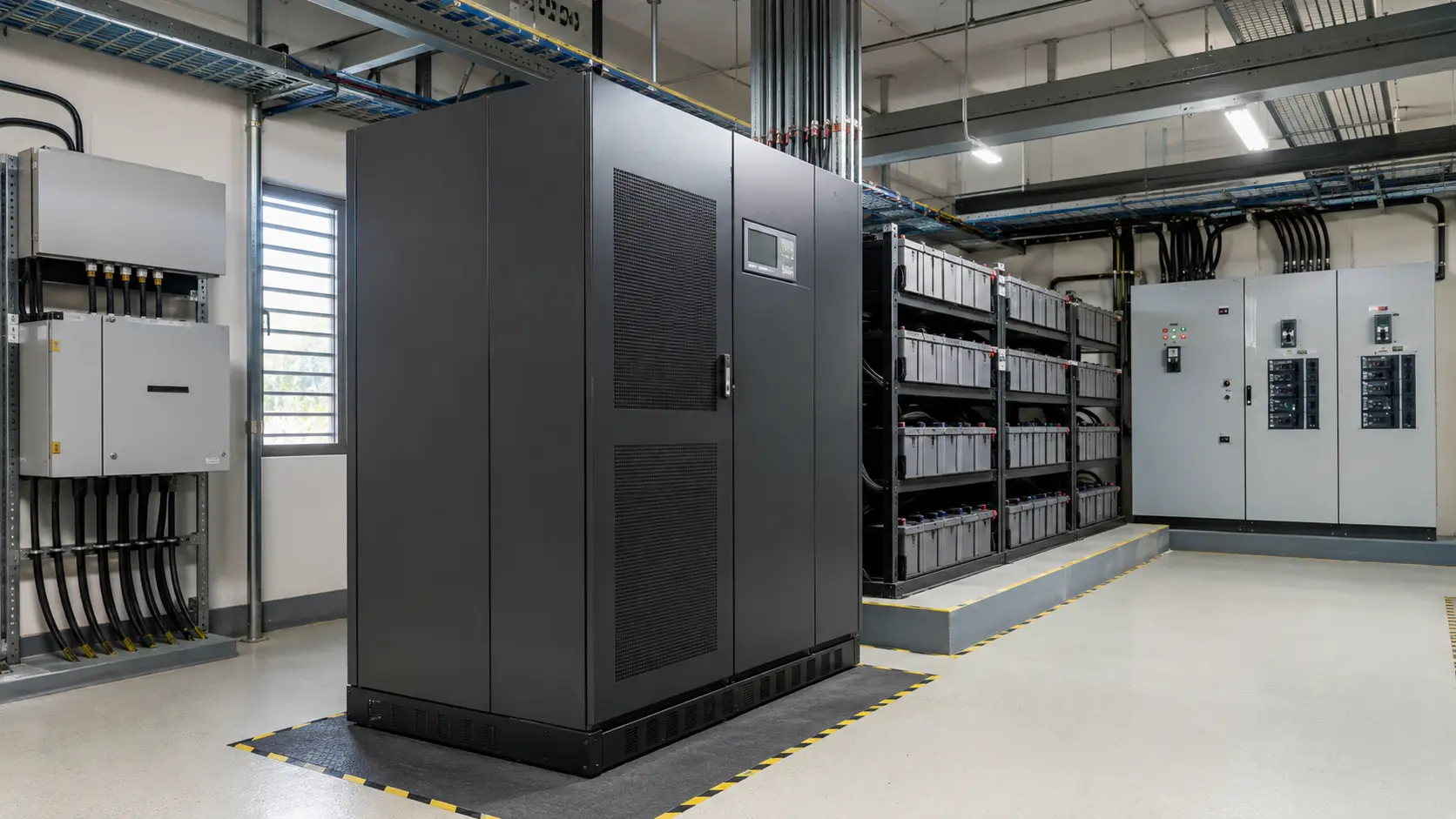
Application visuals explain the electrical environment. Fujitronix product and factory material is identified separately so buyers can easily see what comes directly from the company.

Frequently asked questions
Clear answers before you shortlist a system.
Practical answers for purchase teams, consultants, facility managers and business owners planning a serious enquiry.
01What should I check before buying ups for hospital?+
Identify each protected load, manufacturer electrical requirements, allowable interruption, phase, power quality sensitivity, runtime and clinical consequence. MRI/CT and other equipment require equipment-specific validation rather than generic compatibility claims.
02How should an online UPS be sized?+
Start with the real connected load, power factor, phase, inrush, redundancy requirement and future growth. Battery runtime is then sized separately against the protected load and duty requirement.
03Is an online UPS different from a normal inverter?+
Yes. A true online UPS continuously conditions power through its conversion path and is intended for loads where voltage quality and transfer behaviour are critical. An inverter is generally chosen primarily for outage backup.
04Can Fujitronix customise an online UPS configuration?+
Fujitronix's published product information states that specifications can be customised for specific requirements. Final feasibility is confirmed during technical selection.
05What should I send Fujitronix for a faster ups for hospital recommendation?+
Share a load schedule, present and future kW/kVA, phase, target autonomy, battery preference, bypass requirement, monitoring requirement and site city. If the load includes motors, medical devices or process equipment, include the equipment electrical data as well.
06Can ups for hospital be selected only from price or nominal rating?+
Not reliably. Identify each protected load, manufacturer electrical requirements, allowable interruption, phase, power quality sensitivity, runtime and clinical consequence. MRI/CT and other equipment require equipment-specific validation rather than generic compatibility claims. A comparable proposal should state the assumed load, topology, included battery or accessories, installation scope and the conditions used for sizing.
07What should be verified during installation or commissioning of ups for hospital?+
UPS performance depends on the electrical environment around the cabinet as much as the cabinet itself. Input protection, cable sizing, earthing, ventilation, battery location, bypass strategy and service clearance should be reviewed before installation so the commissioned system matches the design intent. The exact commissioning checklist should follow the selected product documentation and project scope.
08Does Fujitronix support installation and after-sales service for ups for hospital?+
Yes. Fujitronix's supplied company profile lists consultation, installation, operator training, maintenance, battery replacement, upgrades, emergency support, and comprehensive or non-comprehensive AMC options. Final coverage, response and inclusions depend on the product, site and agreed commercial scope.
Need help choosing?