
Portfolio communication
10–250 kVALatest company material states single- and three-phase high-capacity inverter options; confirm the series.Industrial inverter / Heavy-load backup
High Capacity Inverter for Commercial & Industrial Backup
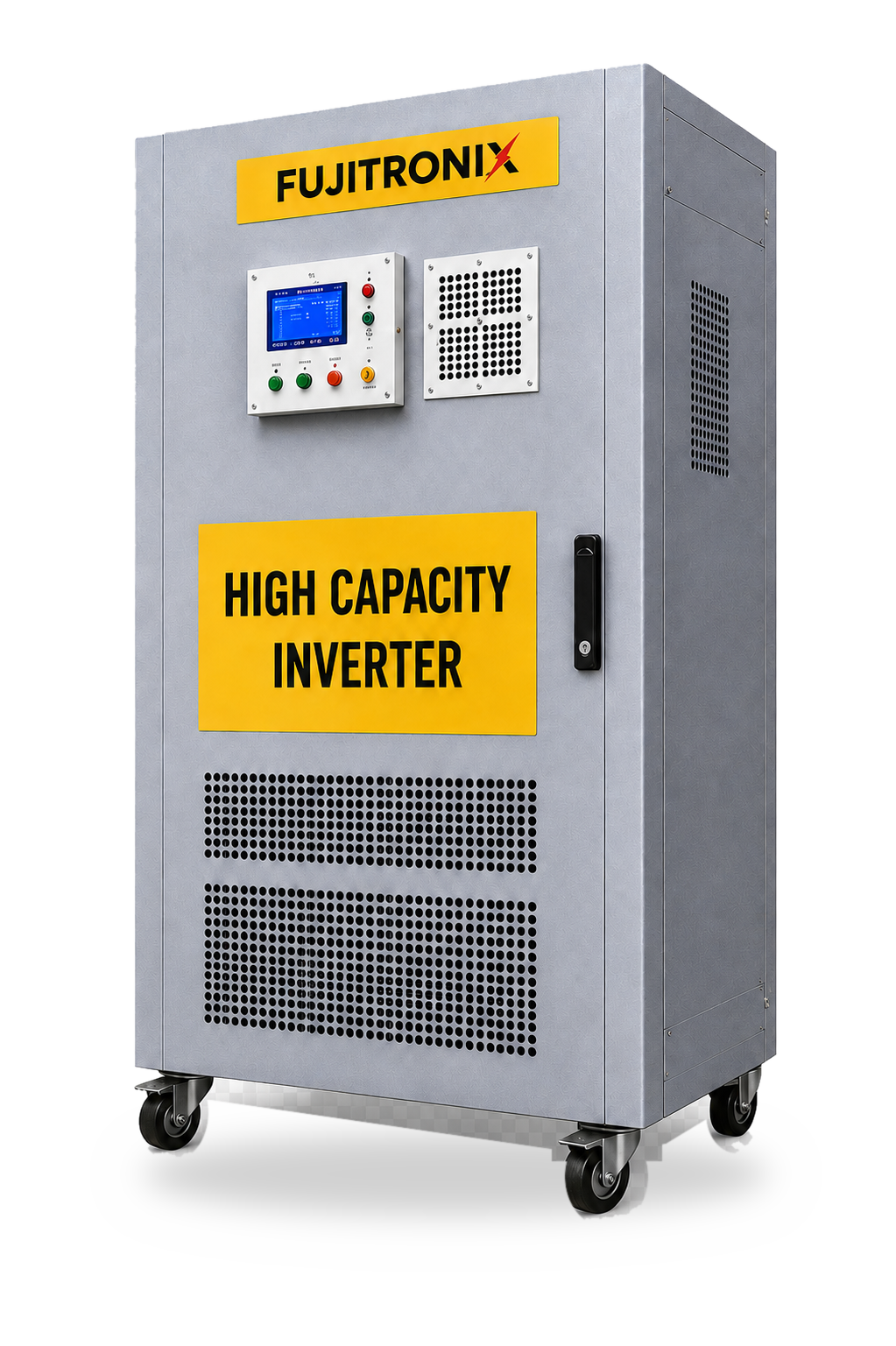
Fujitronix high-capacity inverter systems are designed for larger three-phase and heavy electrical loads where pure sine-wave backup and surge capability matter.
01DSP-based control
02IGBT switching
03PWM sine-wave output
04Three-phase platform
Engineering answer
Select from the load backward.
Confirm the real connected load, phase, starting or inrush behaviour, power-quality requirement, target runtime where relevant, site conditions and future headroom before locking capacity or configuration.
Request technical sizingHigh-capacity inverter
Fujitronix high-capacity inverter · Product photographPublished product-family facts
What Fujitronix states—and what still needs confirmation.
Technology
DSP + IGBTPublished technical information describes DSP control, IGBT switching and pure sine-wave output.Battery
Grade-A lithium readyThe latest company communication highlights lithium battery compatibility for applicable configurations.Protection
Multi-layerOverload, short-circuit, overheat and battery protection are stated; verify model-specific details.Start with the requirement
High capacity should mean high-load competence—not only a bigger kVA label.
Fujitronix high-capacity inverter systems are designed for larger three-phase and heavy electrical loads where pure sine-wave backup and surge capability matter.
How to select
Choose the right system before you choose the rating.
A heavy-duty inverter should be sized from real operating and starting demand, not only the arithmetic sum of nameplate watts. Fujitronix publishes its ARS 335 high-capacity platform with DSP control, IGBT switching and three-phase output across multiple ratings.
- Running load
- Motor / compressor starting current
- Input and output phase
- Backup duration
- Battery type and voltage
- Ambient and installation conditions
Commercial selection
What changes the final configuration and quote?
Account for continuous kW/kVA, peak/inrush, phase, load type, backup runtime, DC system, protection, installation and future growth. Motors and mixed loads need special attention.
System operation
Running load and starting load are two different sizing checks.
Motors, pumps, compressors and transformers can demand much more power for a short period than during normal operation. A proposal should show that the inverter can support both the continuous load and the expected starting sequence without excessive voltage drop or nuisance shutdown. Where several motors exist, define whether they start together or one after another.
Lifecycle planning
The battery, charger and inverter must remain matched over the full service life.
Backup time can fall because the load grows, batteries age or the charger is not set correctly. Routine checks should record operating load, DC voltage, battery/string condition, charger behaviour, cooling, alarms and connections. When batteries are changed, confirm chemistry, bank voltage, usable capacity, cable suitability and protection instead of copying only the old Ah label.
Site planning
Installation planning for high capacity inverter.
Heavy-load backup must account for distribution, starting current and the battery/DC system—not just inverter placement. Cable sizing, protection, ventilation, motor behaviour, battery location and maintainability should be checked before final commissioning.
- Running and starting demand
- Phase balance
- Battery / DC architecture
- Protection and cable sizing
- Ventilation and service clearance
- Controlled load test
RFQ checklist
What to send before requesting a high capacity inverter proposal.
Share connected and starting load, motor or compressor details, phase, expected outage duration, battery preference, operating environment, critical-load priority and any planned future load increase.
Fujitronix approach
A useful proposal should answer more than capacity.
Fujitronix combines requirement review, product selection, manufacturing and lifecycle service. For a useful proposal, share the load schedule, phase, backup objective, site conditions and any monitoring, bypass, battery or integration requirement. The quotation should clearly state the recommended system and what is included.
Buyer & engineering checklist
Four decisions that shape the high capacity inverter proposal.
Clear answers at the enquiry stage reduce incorrect sizing, missing accessories and price comparisons between unlike systems.
What is the running load?
List the equipment that must remain powered and its real operating kW/kVA.
Are motors or compressors involved?
Starting current and duty cycle can materially change inverter and battery sizing.
What backup duration is realistic?
Set the critical-load runtime, battery chemistry, DC voltage, available space and recharge window.
What should be included in the quote?
Inverter rating, phase, battery bank, protections, installation, commissioning, warranty and service scope.
Avoid weak specifications
Common mistakes that lead to the wrong quotation.
- 01Adding only nameplate watts
- 02Ignoring motor starting current
- 03Comparing battery banks with different usable energy
- 04Leaving phase balance and installation conditions unconfirmed
Product + manufacturing evidence
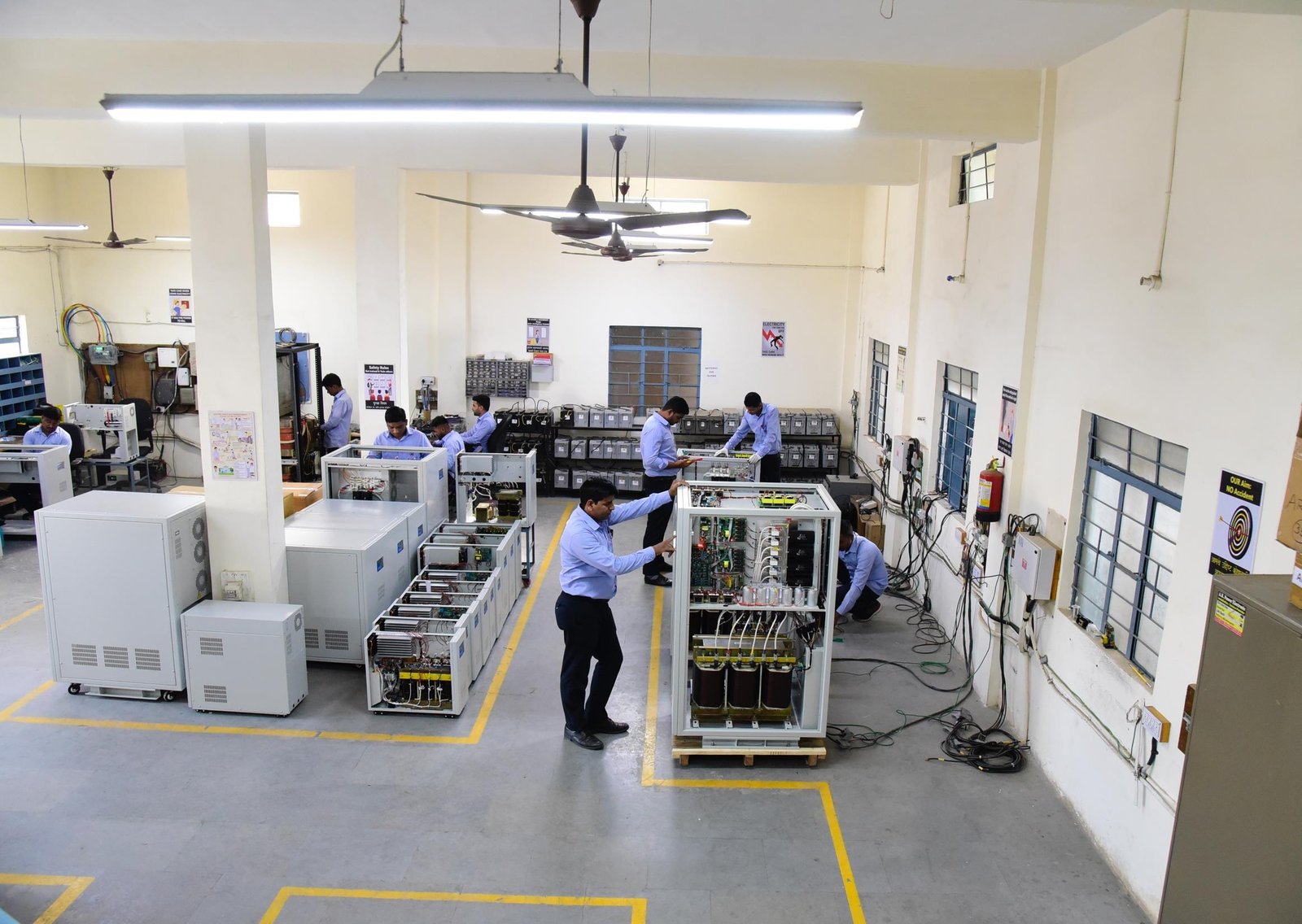
A closer look at the system and the people who build it.
The product cutout comes from Fujitronix's supplied company material. The second image shows the Pune manufacturing or power-electronics environment behind the product range.
Application areas
Where this architecture fits.
Final selection depends on site electrical conditions and the connected load.
01Industrial machinery
02Commercial buildings
03Motors & pumps
04Lighting loads
05Emergency backup
06Large residential applications
Application + product images
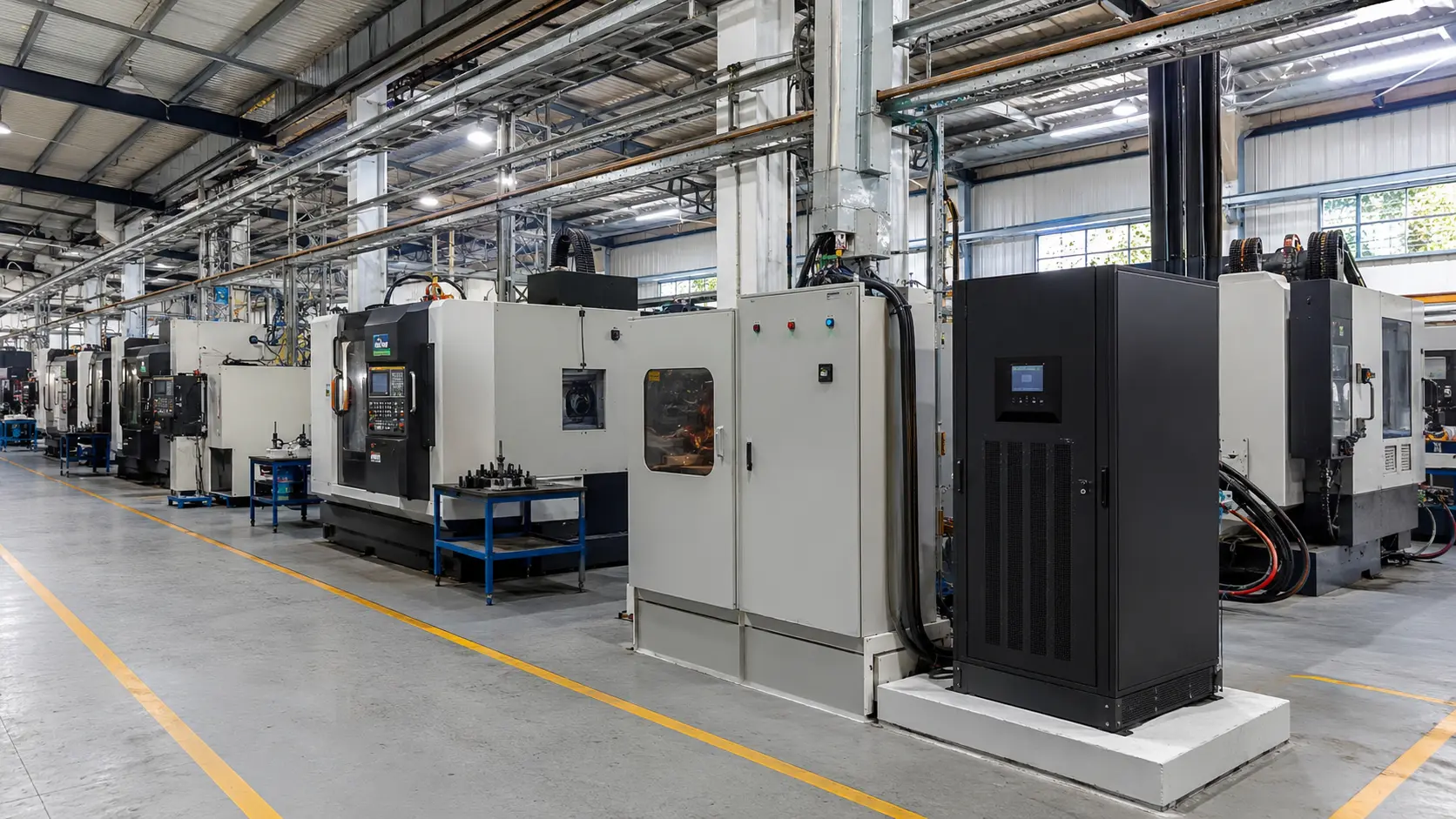
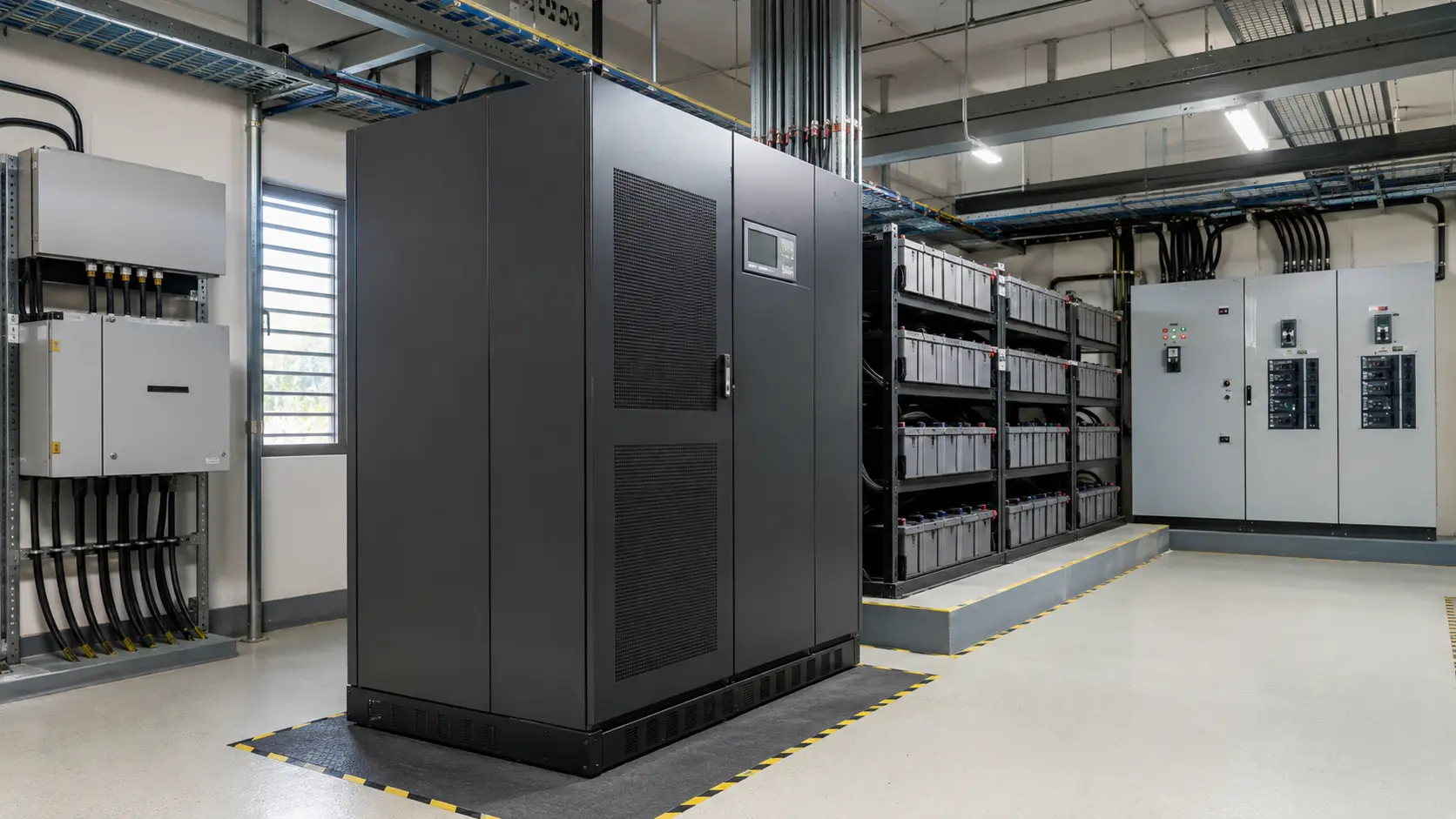
See where the requirement appears in the real world.
Application visuals explain the electrical environment. Fujitronix product and factory material is identified separately so buyers can easily see what comes directly from the company.
Frequently asked questions
Clear answers before you shortlist a system.
Practical answers for purchase teams, consultants, facility managers and business owners planning a serious enquiry.
01What should I check before buying high capacity inverter?+
Account for continuous kW/kVA, peak/inrush, phase, load type, backup runtime, DC system, protection, installation and future growth. Motors and mixed loads need special attention.
02What makes an inverter suitable for industrial loads?+
Industrial selection typically considers phase, surge current, motor starting behaviour, protection, duty cycle, battery architecture and maintainability in addition to the nominal kVA rating.
03Does Fujitronix publish 10 kVA industrial inverter capacity?+
Yes. The current ARS 335 product information lists 6, 8, 10, 15, 20, 30 and 50 kVA ratings.
04How is inverter backup time decided?+
Backup time is primarily a function of connected load, battery voltage and usable battery capacity, with system losses and discharge limits included in the engineering calculation.
05What should I send Fujitronix for a faster high capacity inverter recommendation?+
Share connected and starting load, motor or compressor details, phase, expected outage duration, battery preference, operating environment, critical-load priority and any planned future load increase.
06Can high capacity inverter be selected only from price or nominal rating?+
Not reliably. Account for continuous kW/kVA, peak/inrush, phase, load type, backup runtime, DC system, protection, installation and future growth. Motors and mixed loads need special attention. A comparable proposal should state the assumed load, topology, included battery or accessories, installation scope and the conditions used for sizing.
07What should be verified during installation or commissioning of high capacity inverter?+
Heavy-load backup must account for distribution, starting current and the battery/DC system—not just inverter placement. Cable sizing, protection, ventilation, motor behaviour, battery location and maintainability should be checked before final commissioning. The exact commissioning checklist should follow the selected product documentation and project scope.
08Does Fujitronix support installation and after-sales service for high capacity inverter?+
Yes. Fujitronix's supplied company profile lists consultation, installation, operator training, maintenance, battery replacement, upgrades, emergency support, and comprehensive or non-comprehensive AMC options. Final coverage, response and inclusions depend on the product, site and agreed commercial scope.
Need help choosing?